

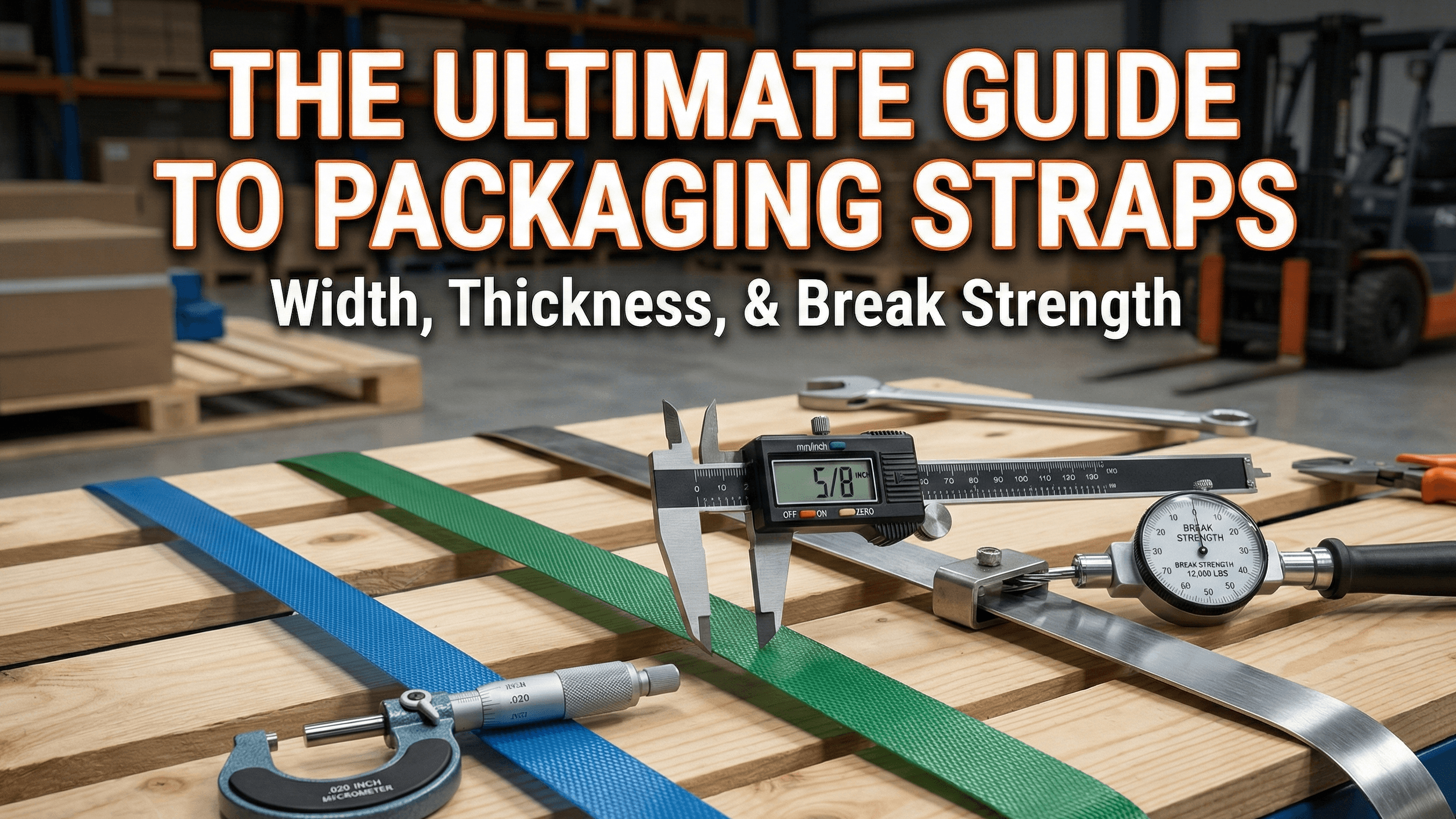
The Ultimate Guide to Packaging Straps: Width, Thickness, and Break Strength
In the world of logistics and warehousing, the difference between a satisfied customer and a damaged return often comes down to a thin strip of plastic or metal. Packaging strapping (also called bundling or banding) is the unsung hero of the shipping world.
But when you open a catalog, the wall of numbers—widths, gauges, and pound ratings—can be overwhelming. Does a 1/2" strap hold the same as a 5/8"? Is steel always better than plastic?
This guide breaks down the three critical metrics of packaging straps—Width, Thickness, and Break Strength—so you can secure your loads with confidence.
1. The Three Titans: Material Context
Before we analyze the measurements, you must understand the material. The "stats" (width/thickness) mean nothing without knowing what the strap is made of.
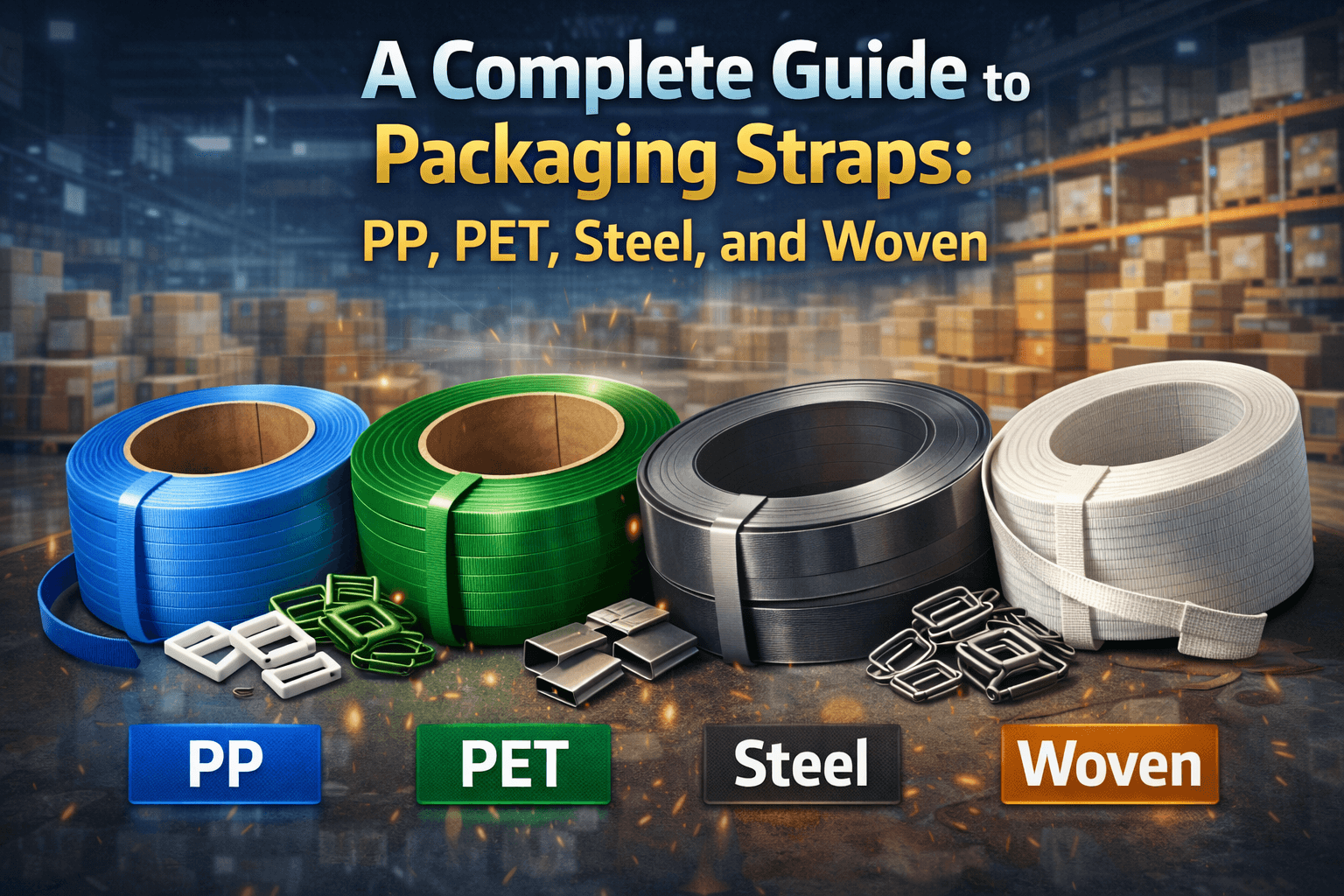
For a comprehensive overview of all packaging strap materials including PP, PET, Steel, and woven options, check out our complete guide to packaging straps.
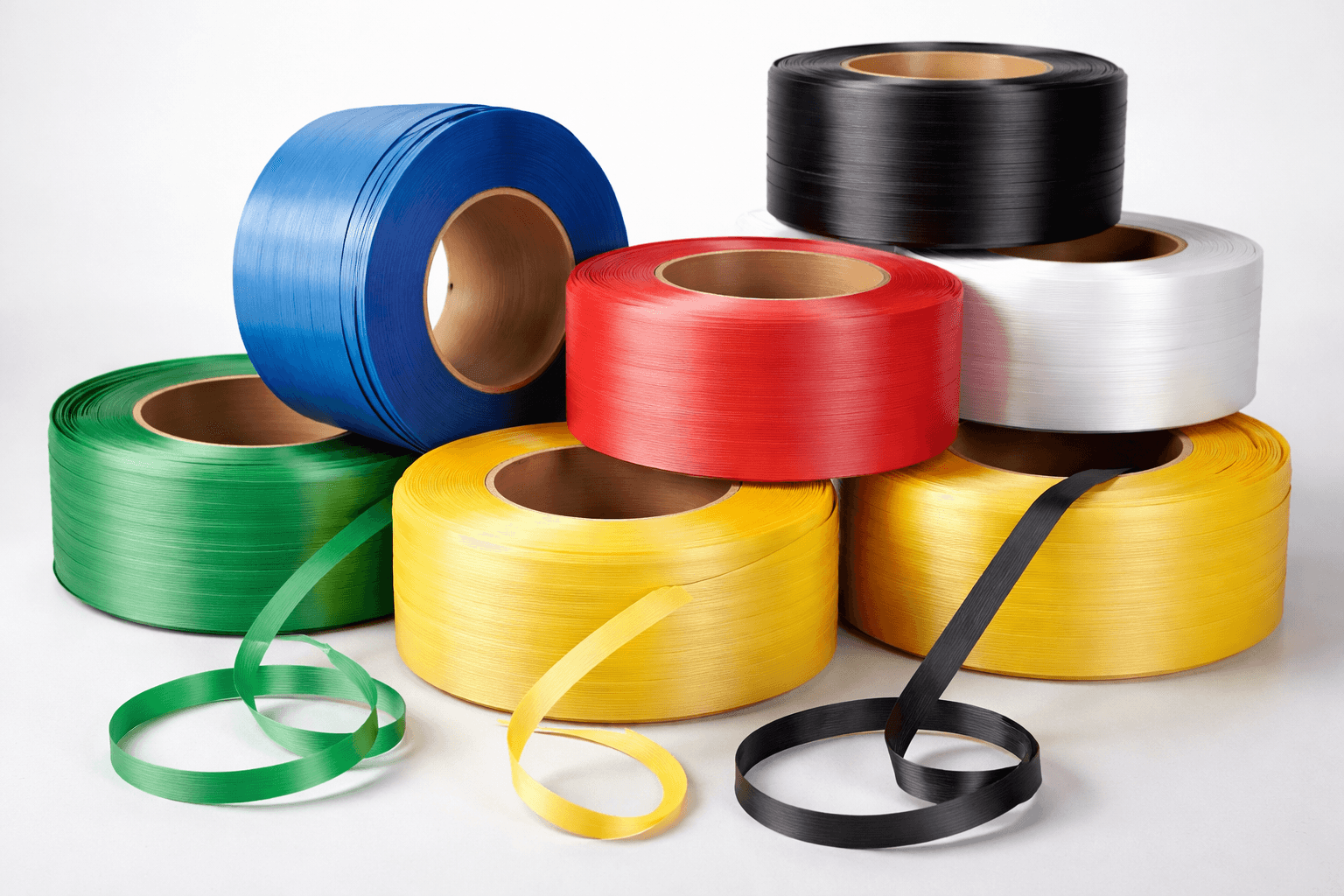
Polypropylene (PP)
Best for: Light to medium duty, short transportation, color-coding. The Vibe: Economical and flexible. It has high elongation (stretch) but low "retained tension" (it relaxes over time).
Polyester (PET)
Best for: Heavy-duty loads, brick, lumber, bottles. The Vibe: The modern steel replacement. It is strong, retains tension even when the load settles or shrinks, and absorbs impact without snapping.
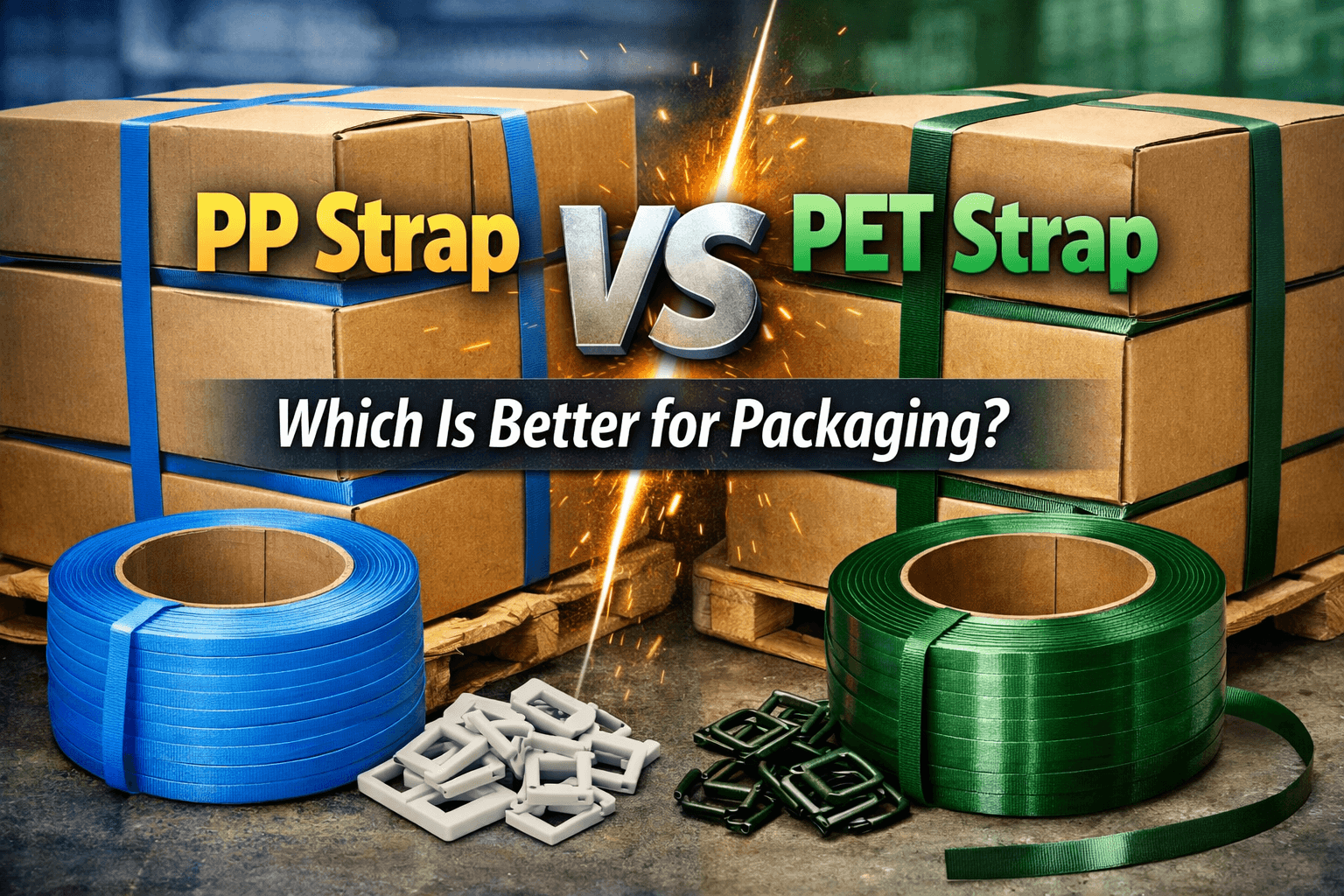
For an in-depth comparison of PP vs PET straps to help you choose the right material, read our PP strap vs PET strap guide.
If you're considering PET straps for their eco-friendly benefits, discover why PET straps are sustainable.
Steel
Best for: Extreme heavy-duty, sharp edges, metal coils, hot temperatures. The Vibe: The old-school heavyweight. Zero stretch, maximum strength, but heavy and can rust.
For heavy industry applications looking to replace steel with PET, explore our 2026 strategic guide for steel replacement.
2. Width: More Than Just Size
The width of the strap dictates the surface area in contact with your package.Why it matters:A wider strap distributes the tension force over a larger area. If you are strapping down soft cartons or sensitive lumber, a narrow strap might dig in and cut the product (a "knife effect"). A wider strap prevents this damage.
Common Standards:
- 1/4" – 3/8" (5mm - 9mm): Typically used for light bundling (e.g., newspapers, corrugated bundles) in automated arch machines.
- 1/2" (12mm): The industry standard for general palletizing.
- 5/8" – 3/4" (16mm - 19mm): Heavy-duty applications. Common in construction materials and heavy machinery parts.
Pro Tip: Your strapping tools (tensioners and sealers) are size-specific. You cannot use 5/8" strap in a tool built for 1/2". Always match your consumables to your machinery.
Looking for custom-sized straps? Check our FAQ section for information on custom strap options and specifications.
3. Thickness (Gauge): The Hidden Strength
Thickness is often measured in thousands of an inch (e.g., .020) or millimeters. While width is obvious to the eye, thickness is felt in the stiffness and durability of the strap.
Why it matters:
- Feed-ability: If you strap pallets by hand, you have to push the strap under the pallet. A very thin strap (e.g., .015") might curl or bend, making it frustrating to feed. A thicker strap (e.g., .035") has the stiffness to slide right through.
- Shear Resistance: Thicker straps are harder to cut on sharp corners.
The Relationship: Generally, increasing the thickness increases the break strength if the width remains the same. However, a thick Polypropylene strap is still weaker than a thin Steel strap.
4. Break Strength: The Limit
This is the metric everyone looks at first. Break Strength is the amount of force (in lbs or kg) required to snap the strap.
Calculating Your Needs (The Safety Factor)
Never match the break strength exactly to your pallet weight. You need a Safety Factor.
- Static Loads (Sitting in a warehouse): 2:1 ratio.
- Dynamic Loads (Being shipped by truck/rail): Keep the safety factor high (often 3:1 or 4:1) because sudden braking and shifting create forces much higher than the actual weight of the load.
Example: If you are shipping a 2,000 lb pallet, you don't just use a strap rated for 2,000 lbs. You might use two straps rated for 1,500 lbs each (Total 3,000 lbs) or go for a heavier grade depending on transport mode.
System Strength vs. Strap Strength
This is the most common pitfall.
- Strap Strength: The strength of the plastic/metal itself.
- System Strength (Joint Efficiency): How strong the strap is after you tie it.
Whether you use a metal seal, a friction weld, or a heat seal, the "knot" is always the weakest point. A metal seal usually retains about 75-80% of the strap's break strength. A high-quality friction weld (used with battery tools) can retain 85-90%.
Quick Comparison Guide
| Metric | Polypropylene (PP) | Polyester (PET) | Steel | |--------|-------------------|-----------------|-------| | Common Widths | 5mm - 1/2" | 1/2" - 1" | 3/8" - 1 1/4" | | Typical Break Strength | 200 - 1,000 lbs | 500 - 2,500 lbs | 800 - 12,000+ lbs | | Elongation (Stretch) | High (Recoverable) | Medium (Low Creep) | Low (Zero Stretch) | | Best Use | Light cartons, short haul | Heavy pallets, lumber | Heavy machinery, coils |
How to Choose the Right Strap
If you are struggling to pick the right spec, ask yourself these three questions:
Does the load settle?
If the load shrinks or settles (like a pallet of sawdust bags or lumber), use Polyester. It has "memory" and will shrink with the load. Steel will become loose; Polypropylene will stretch and fail.
How heavy is the load?
- < 500 lbs: Polypropylene is cost-effective and sufficient.
- 500 - 2,000 lbs: Polyester is the sweet spot.
-
2,000 lbs or very sharp: Consider High-Tensile Steel.
How far is it traveling?
If it is just moving across the warehouse, break strength matters less. If it is going on a flatbed truck across the country, you need high break strength and UV resistance (Polyester/Steel).
Summary
Packaging straps are the seatbelts of the logistics world.
- Width protects your product surface.
- Thickness helps with feeding and durability.
- Break Strength ensures the load arrives safely.
By balancing these three factors, you ensure that your product arrives in the exact same condition it left your facility—secure, intact, and professional.
Explore More Resources
Ready to dive deeper into packaging solutions? Check out our comprehensive guides:
- Complete Guide to Packaging Straps: PP, PET, Steel, and Woven
- PP Strap vs. PET Strap: Which Is Better for Packaging?
- Sustainable Packaging: Are PET Straps Eco-Friendly?
- Replacing Steel with PET Strapping: A 2026 Strategic Guide
Have questions about our products? Visit our FAQ section or contact us directly.
Related pages
From this article: Product catalogue
Product catalogue · Services · Company profile · About us · Contact & quotes · All articles