

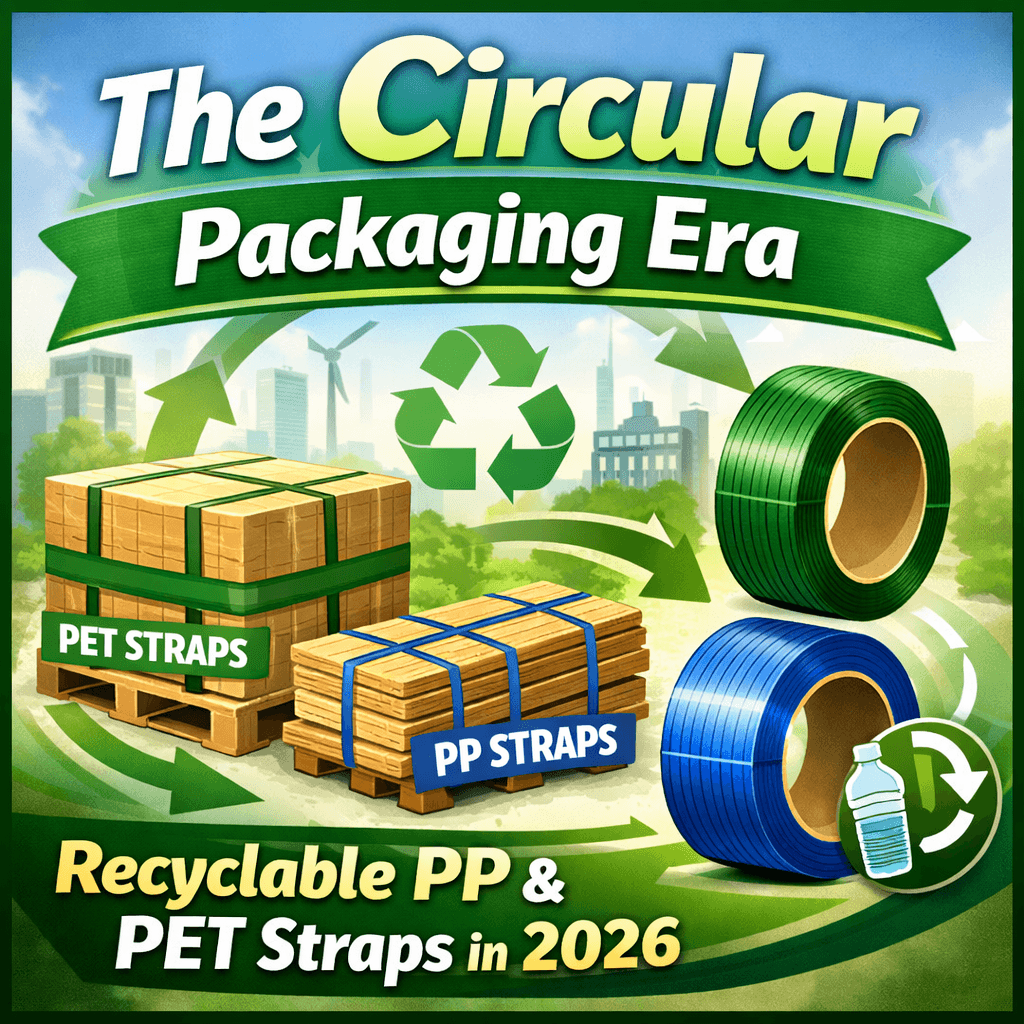
The Circular Packaging Era: Recyclable PP and PET Straps in 2026
As of August 2026, the transition to sustainable packaging has moved from a voluntary "green" initiative to a strict regulatory mandate. With the full enforcement of the EU Packaging and Packaging Waste Regulation (PPWR) and similar global frameworks, manufacturers are now legally required to prove the circularity of their tertiary packaging.
In this landscape, strapping is no longer viewed as "waste"—it is a valuable raw material. Fortunately, Polypropylene (PP) and Polyester (PET) are among the most efficiently recyclable plastics in the industrial stream, providing a clear pathway to 2026 compliance.
The Mandate: Circularity as a Legal Requirement
As of August 2026, the transition to sustainable packaging has moved from a voluntary "green" initiative to a strict regulatory mandate. With the full enforcement of the EU Packaging and Packaging Waste Regulation (PPWR) and similar global frameworks, manufacturers are now legally required to prove the circularity of their tertiary packaging.
In this landscape, strapping is no longer viewed as "waste"—it is a valuable raw material. Fortunately, Polypropylene (PP) and Polyester (PET) are among the most efficiently recyclable plastics in the industrial stream, providing a clear pathway to 2026 compliance.
Sustainable Material Breakdown
1. PP (Polypropylene) Straps: The "Green PP" Revolution
Commonly used for light-to-medium applications, Polypropylene has undergone a massive shift in 2026.
PCR Integration
Modern "Green PP" straps now incorporate high percentages of Post-Consumer Recycled (PCR) content without sacrificing the weldability required for friction-seal machines.
Application
Ideal for high-velocity logistics in pharmaceuticals, apparel, and FMCG (Fast-Moving Consumer Goods) where lightweighting is a priority.
Carbon Impact
Switching from virgin to 50% PCR PP can reduce the carbon footprint of your bundling process by up to 30%.
2. PET (Polyester) Straps: The Gold Standard of Plastic #1
PET is the titan of the circular economy. Classified as Plastic #1, it is the most widely recycled polymer globally.
Bottle-to-Strap Technology
Most 2026 industrial PET straps are manufactured from 100% recycled bottle flakes (rPET). This creates a "closed-loop" where yesterday's soda bottle becomes today's heavy-duty industrial reinforcement.
Performance Parity
Advanced extrusion techniques ensure that rPET straps maintain the same high-tension stability and shock absorption as virgin materials, making them a "drop-in" sustainable replacement for steel.
Why Sustainable Strapping Wins in 2026
1. Navigating EPR and Modulated Fees
2026 marks the era of Modulated Extended Producer Responsibility (EPR) fees. Under these laws (such as the UK's pEPR), the cost of packaging is tied to its recyclability:
Green-Rated Packaging
Using 100% recyclable PET or PP with high recycled content qualifies for the lowest fee tiers.
The "Polluter Pays" Penalty
Companies using composite materials or non-recyclable "orphan" plastics face significantly higher financial penalties at the point of production.
2. Consumer & B2B Perception
Sustainability is no longer a niche differentiator; it is the baseline.
The 73% Metric
Recent 2026 market data indicates that 73% of industrial procurement officers now prioritize suppliers who provide transparent data on the "End-of-Life" (EoL) of their packaging.
Minimalist Aesthetics
Using "clear" or "green" unpigmented straps signals a commitment to high-purity recycling streams, boosting brand trust in B2B sectors.
3. Cost Stability in a Volatile Market
While "virgin" plastics are tied to the volatility of global oil and gas prices, the recycled plastic market has matured.
Stable Supply Chains
By sourcing recycled flakes from local waste streams, manufacturers of PET strapping provide more predictable pricing, protecting your margins from the energy-related price spikes common in 2025.
Conclusion: Future-Proofing Your Logistics
The 2026 regulatory shift isn't a hurdle; it's an opportunity to optimize. By adopting high-PCR content PET and PP strapping, your operation meets global ESG targets, avoids punitive EPR fees, and participates in a regenerative economy that values resources over refuse.
Is your strapping supply chain 2026-compliant?
Related pages
From this article: Product catalogue
Product catalogue · Services · Company profile · About us · Contact & quotes · All articles