

Smart Strapping Machines: The Backbone of Industry 4.0 Warehousing
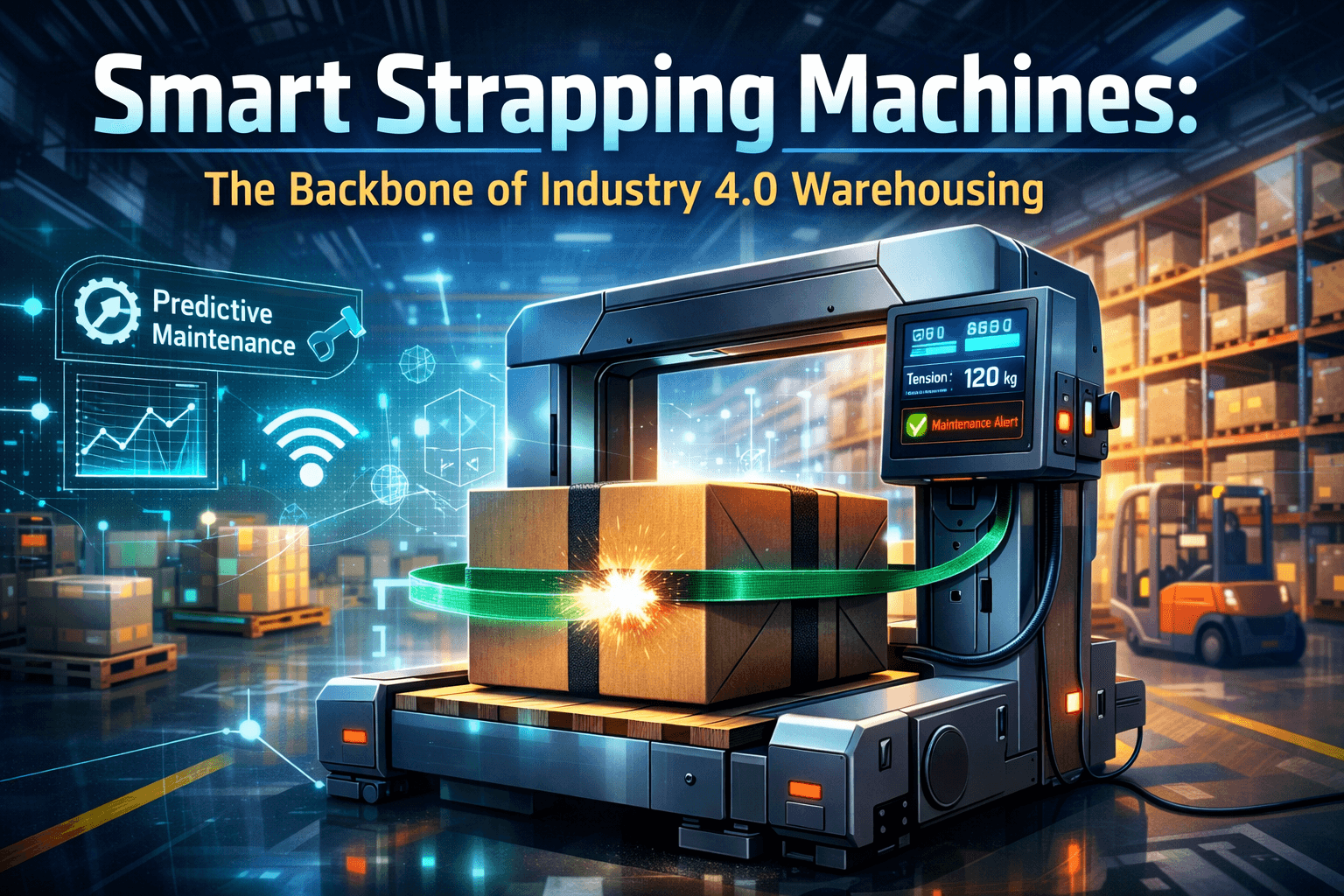
In 2026, a strapping machine is no longer just a mechanical end-of-line tool; it is a critical data node. The integration of the Internet of Things (IoT) has transformed the humble strapper into a source of real-time operational intelligence. Fully automatic systems are now seamlessly woven into Warehouse Management Systems (WMS), providing live metrics on throughput, material consumption, and equipment health.
The Hook: From Simple Tools to Intelligent Data Nodes
In 2026, a strapping machine is no longer just a mechanical end-of-line tool; it is a critical data node. The integration of the Internet of Things (IoT) has transformed the humble strapper into a source of real-time operational intelligence. Fully automatic systems are now seamlessly woven into Warehouse Management Systems (WMS), providing live metrics on throughput, material consumption, and equipment health.
The Anatomy of a 2026 Strapping System
1. Friction Weld Sealing Technology
Metal seals are increasingly becoming relics of the past. Modern 2026 systems utilize High-Frequency Friction Weld technology. By using rapid vibration to generate localized heat, the machine fuses PP or PET straps at the molecular level.
Joint Efficiency
This process achieves a joint strength of 75–90% of the strap's total break strength—the highest in the industry.
Sustainability
Eliminating metal seals reduces material waste and makes the entire bundle 100% recyclable in a single stream.
2. Precision Tension Monitoring (N)
Traditional machines relied on manual "feel" or mechanical clutches. Smart machines now use electronic transducers to apply precision force measured in Newtons (N).
Dynamic Adjustment
The system automatically adjusts tension based on the package profile detected by sensors. This prevents "crush damage" on fragile e-commerce cartons while ensuring "zero-shift" stability for heavy industrial pallets.
Data Logging
Every strap's tension is logged, providing a digital paper trail for quality insurance and claims mitigation.
3. IoT & Predictive Maintenance
The "Sealing Head" is the heart of the machine and the most common point of failure. In 2026, high-end systems use vibration and thermal sensors to monitor this component's health.
Self-Diagnostics
Instead of waiting for a breakdown, the machine alerts operators when the tensioning gripper or sealing blade requires cleaning or shows early signs of wear.
Seasonal Uptime
This "Just-in-Time" maintenance is critical for high-volume logistics, ensuring 99.9% uptime during peak shipping seasons like Q4.
Which Machine is Right for Your Operation?
Choosing the correct level of automation is the difference between a bottleneck and a streamlined flow.
Semi-Automatic: The SME Workhorse
Best For
Small-to-medium enterprises (SMEs) handling under 20 pallets per day or irregular office bundling.
Mechanism
An operator manually feeds the strap around the load; the machine handles tensioning and sealing.
2026 Update
Now featuring battery-powered portability and "Soft Mode" for delicate goods.
Automatic Arch Machines: The E-commerce Specialist
Best For
High-speed fulfillment centers requiring 50+ straps per minute.
Mechanism
Conveyor-fed systems where the package passes through a fixed "arch." The machine detects the box and applies straps at pre-programmed intervals.
Benefit
Zero human intervention, designed for 24/7 high-velocity environments.
Robotic Pallet Strappers: The Industrial Gold Standard
Best For
Irregular, oversized, or multi-directional loads (e.g., machinery, timber, mixed-SKU pallets).
Mechanism
A multi-axis robotic arm (or a vertical "lance" system) that maneuvers around the pallet.
Intelligence
These machines use 3D vision to "see" the load, ensuring the strap is placed exactly where structural integrity is highest, regardless of the pallet's shape.
Conclusion: The Strategic Integration
As logistics costs continue to rise, the goal for 2026 is Total Process Visibility. Investing in a smart strapping system isn't just about the physical band—it's about capturing the data that allows your warehouse to run leaner, safer, and faster.
Is your packaging line ready for the Industry 4.0 transition?
Related pages
From this article: Fully automatic strapping machine · Services
Product catalogue · Services · Company profile · About us · Contact & quotes · All articles