

A Complete Guide to Packaging Straps: PP, PET, Steel, and Woven
While the strapping machine provides the power, the strap material itself is what ultimately holds your cargo together. Choosing the wrong strap can lead to snapped lines, damaged goods, or unnecessary expenses.
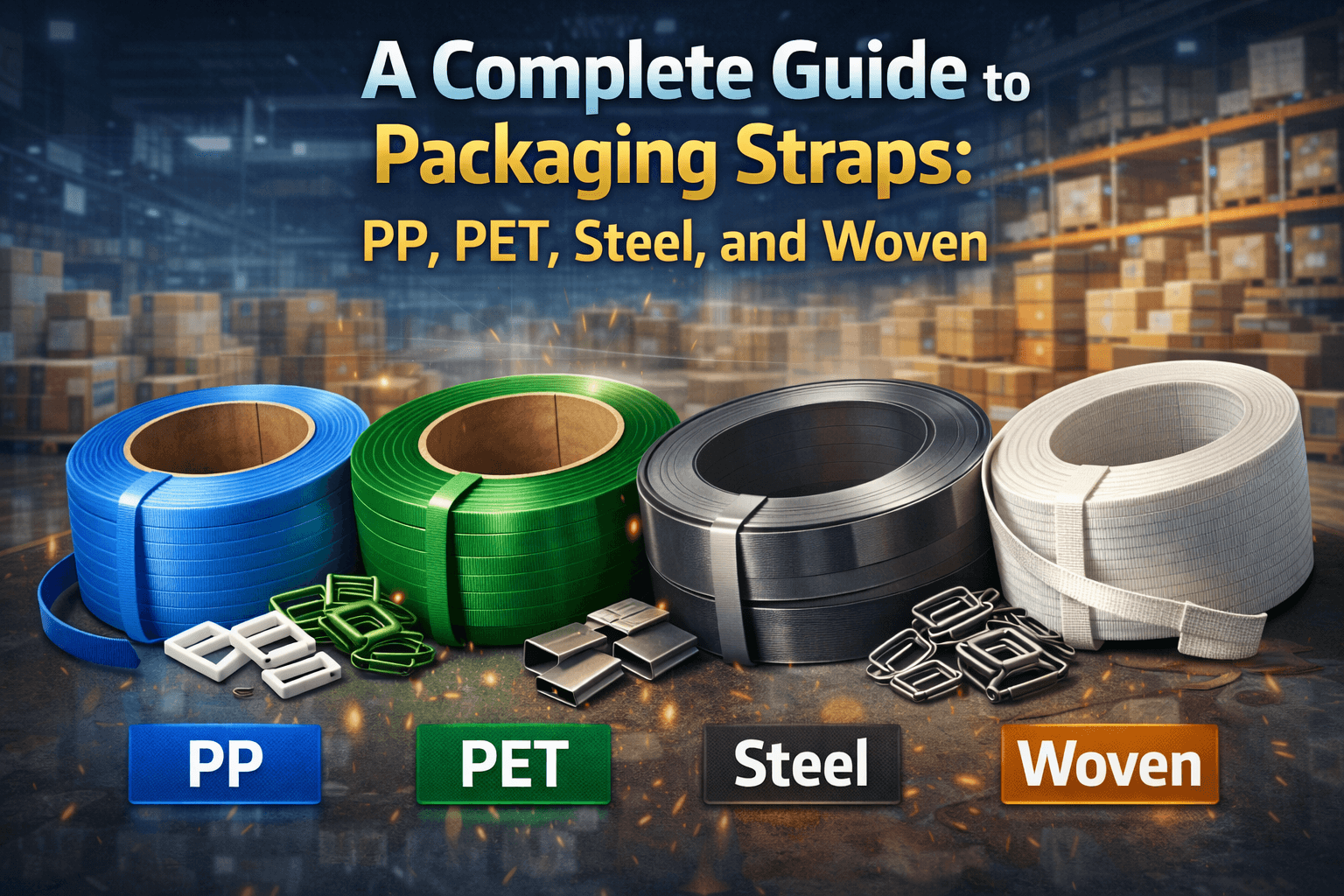
This guide breaks down the four primary types of packaging straps to help you make an informed decision for your supply chain.
1. Why Choosing the Right Strap Matters
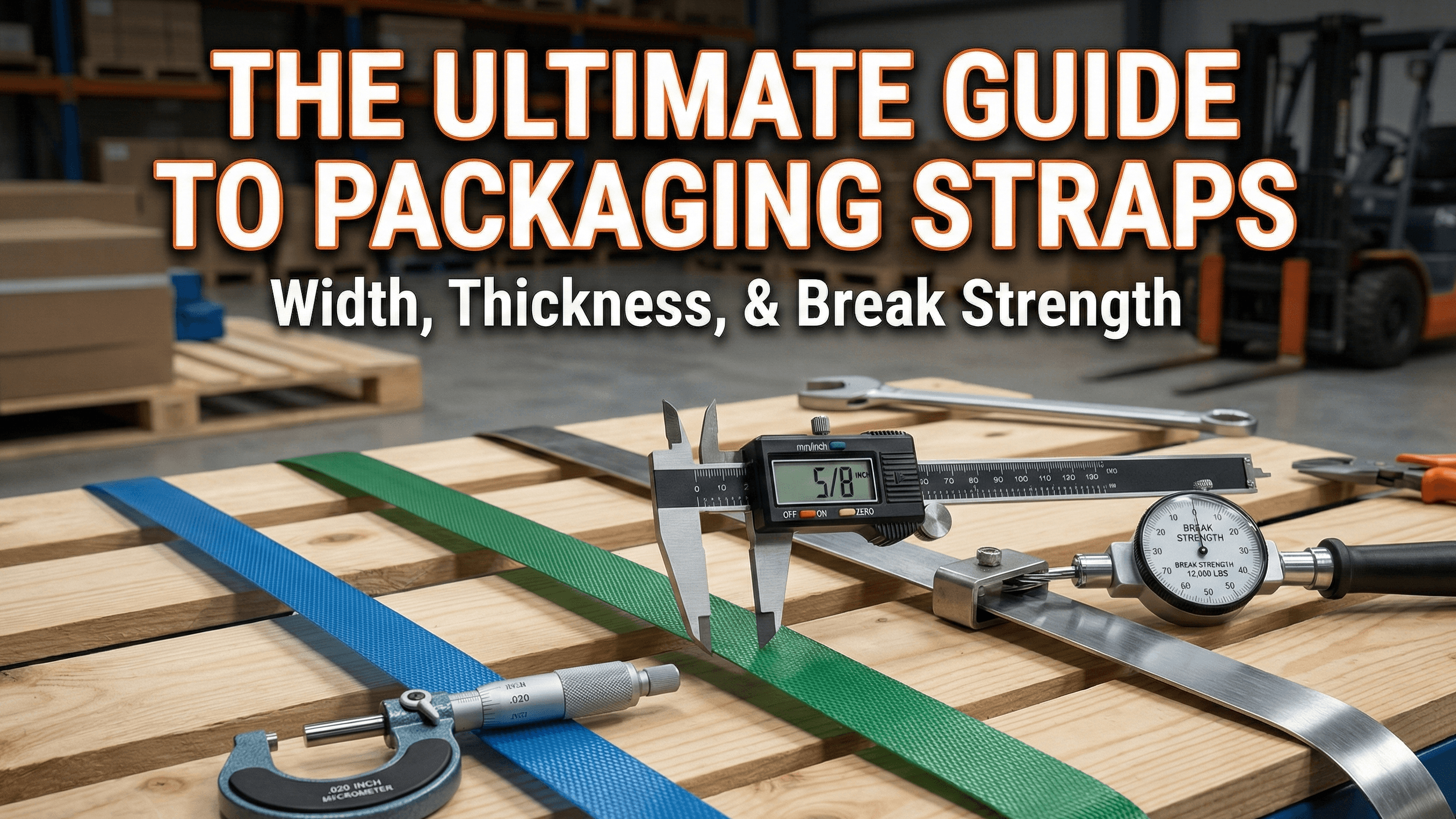
The "perfect" strap is a balance between break strength (the force needed to snap the strap) and elongation recovery (the strap's ability to return to its original length after being stretched). Using a heavy-duty steel strap for a light box is a waste of money, while using a light plastic strap for a pallet of bricks is a safety hazard.
2. PP Straps: Polypropylene
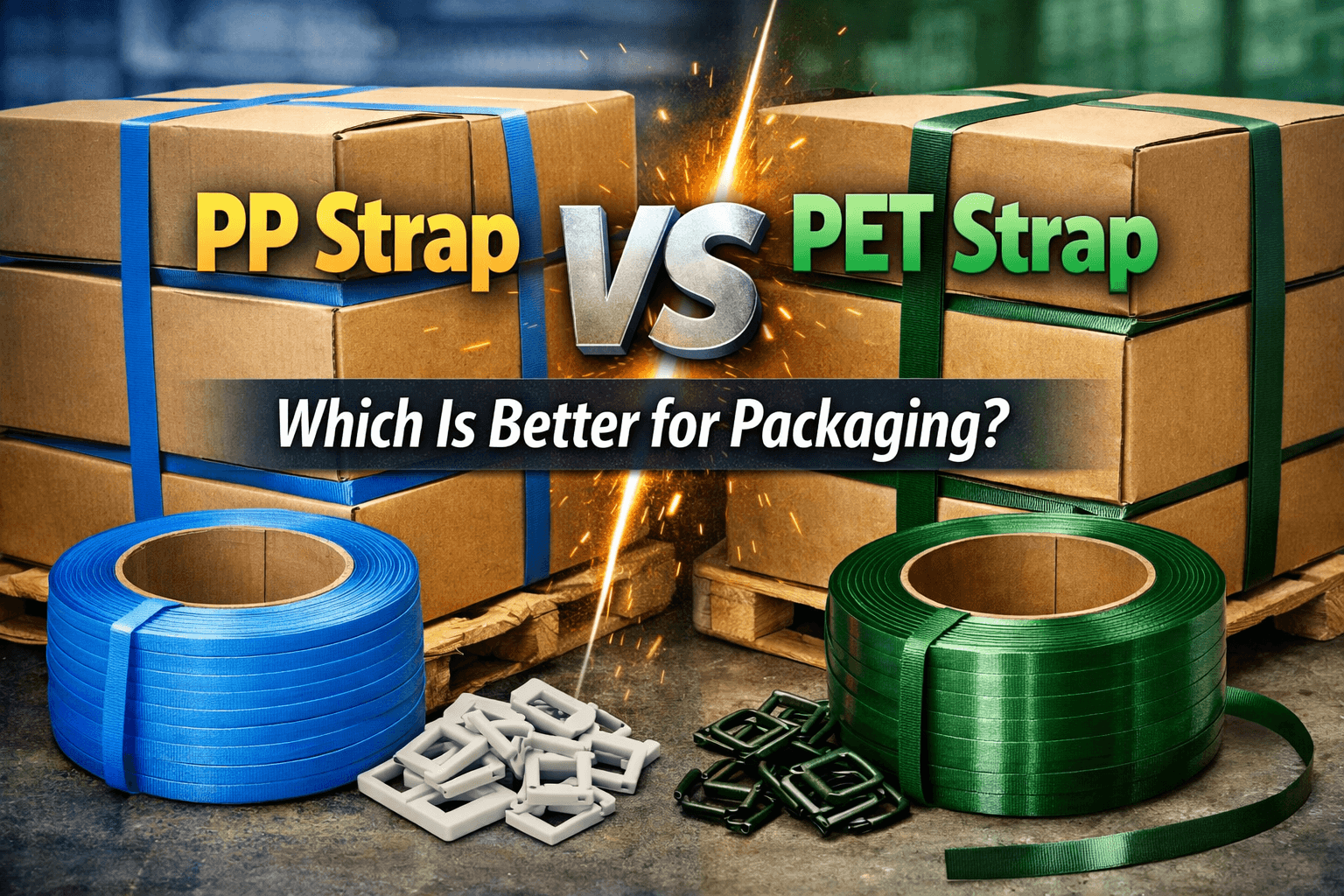
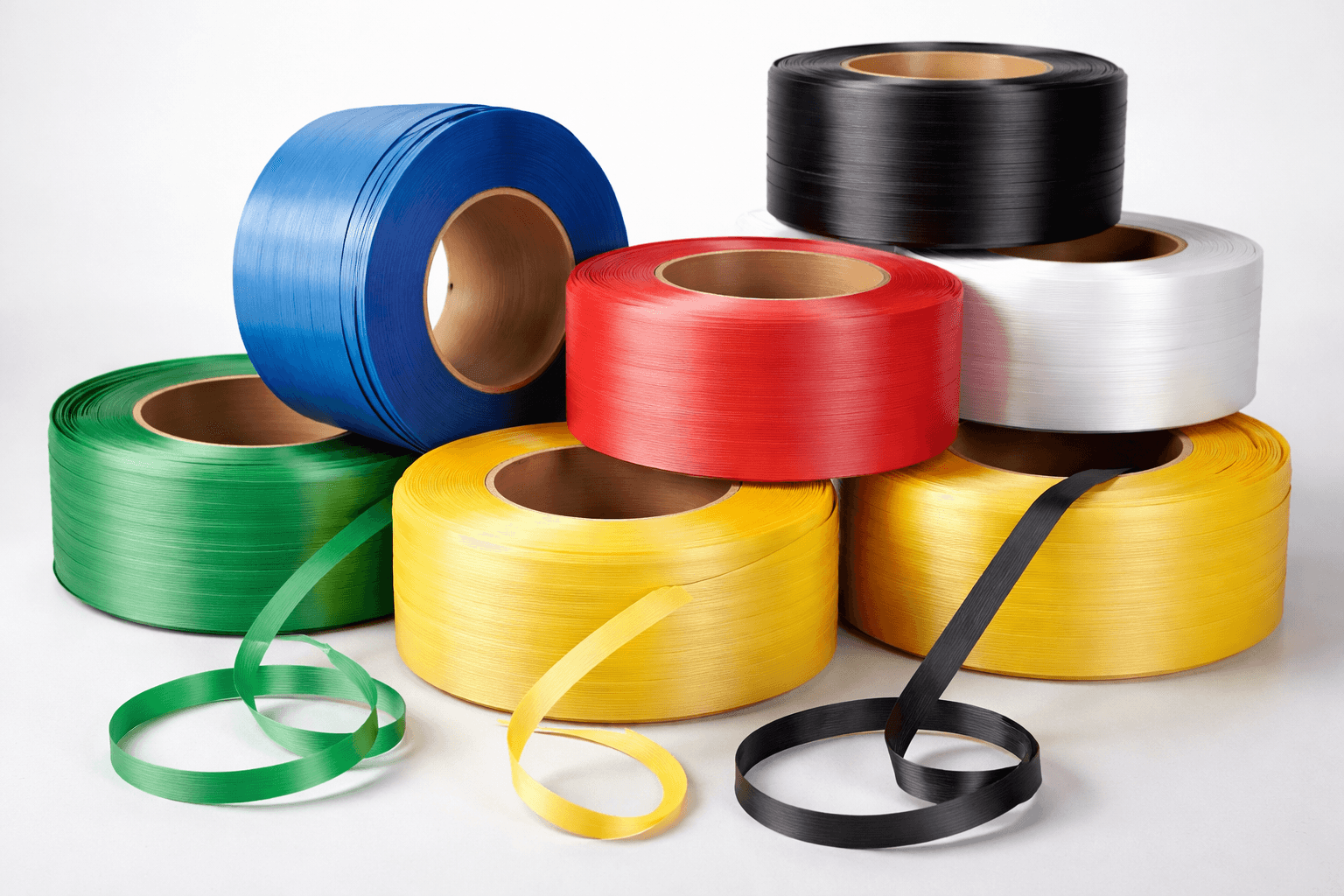
Polypropylene (PP) is the most common and economical strapping material, widely used for light to medium-duty applications.
Key Features
- High elongation (stretches easily) but low recovery
- Lightweight and resistant to most chemicals
Best For
Bundling newspapers, sealing small cardboard boxes, and light palletizing.
Application
Usually applied with semi-automatic or fully automatic machines using heat-seal technology.
3. PET Straps: Polyester
Polyester (PET) is often considered the "modern alternative to steel." It is the strongest plastic strapping material and offers excellent tension maintenance.
Key Features
- High break strength and superior "elongation recovery"
- If a load settles or shrinks during transit, PET straps stay tight
- More sustainable, as it is often made from recycled plastic bottles
Best For
Medium to heavy-duty loads, such as lumber, metal parts, or large beverage pallets.
Application
Applied with battery-powered handheld tools or heavy-duty automatic strapping machines using friction-weld sealing.
4. Steel Straps: The Heavy-Duty Standard
Steel is the oldest and strongest strapping material. While plastic has replaced it in many areas, steel remains irreplaceable for specific high-heat or ultra-heavy applications.
Key Features
- Minimal to zero stretch
- Can withstand extremely high temperatures and sharp edges that would cut through plastic
Best For
Steel coils, heavy machinery parts, construction materials, and shipments with sharp corners.
Application
Applied with manual or pneumatic tools using metal seals or "sealless" punch joints.
5. Woven and Composite Straps
Woven polyester straps consist of polyester filaments woven together, often coated with a polymer (composite). They are often referred to as "synthetic steel."
Key Features
- Extremely soft and flexible, meaning they won't scratch or damage painted surfaces
- Weather-resistant and do not rust like steel
Best For
Securing awkward loads on flatbed trucks, sea containers, and fragile high-value equipment.
Application
Almost always applied manually using a tensioner and high-strength galvanized wire buckles.
6. Comparison Table and Selection Tips
| Material | Strength | Flexibility | Cost | Weather Resistance | |----------|----------|-------------|------|-------------------| | PP | Low | High | $ | Good | | PET | Medium-High | Medium | $$ | Excellent | | Steel | Very High | Low | $$$ | Poor (Can rust) | | Woven | High | Very High | $$ | Excellent |
Quick Selection Tips
Does the load settle?
If your load (like wood) shrinks or settles, use PET for its recovery properties.
Is it hot?
If you are strapping items coming straight out of an oven or furnace, use Steel.
Is the surface fragile?
Use Woven straps to prevent scratching or "corner crush."
Is cost the only factor?
For light internal bundling of boxes, PP is your most cost-effective choice.
Conclusion
Selecting the right strap is just as important as selecting the right machine. By matching the material's physical properties—like break strength and elongation—to your specific cargo, you ensure a safer, more cost-effective shipping process.
Related pages
From this article: Product catalogue
Product catalogue · Services · Company profile · About us · Contact & quotes · All articles